. brightmeadowknits: CSM
Showing posts with label CSM. Show all posts

Friday, April 7, 2023

Franz and Pope Restoration Part 2


 Earlier I posted Part 1 of my restoration efforts.  I had to laugh at the booklet advertising the machine.  A complete sock in seven minutes!  


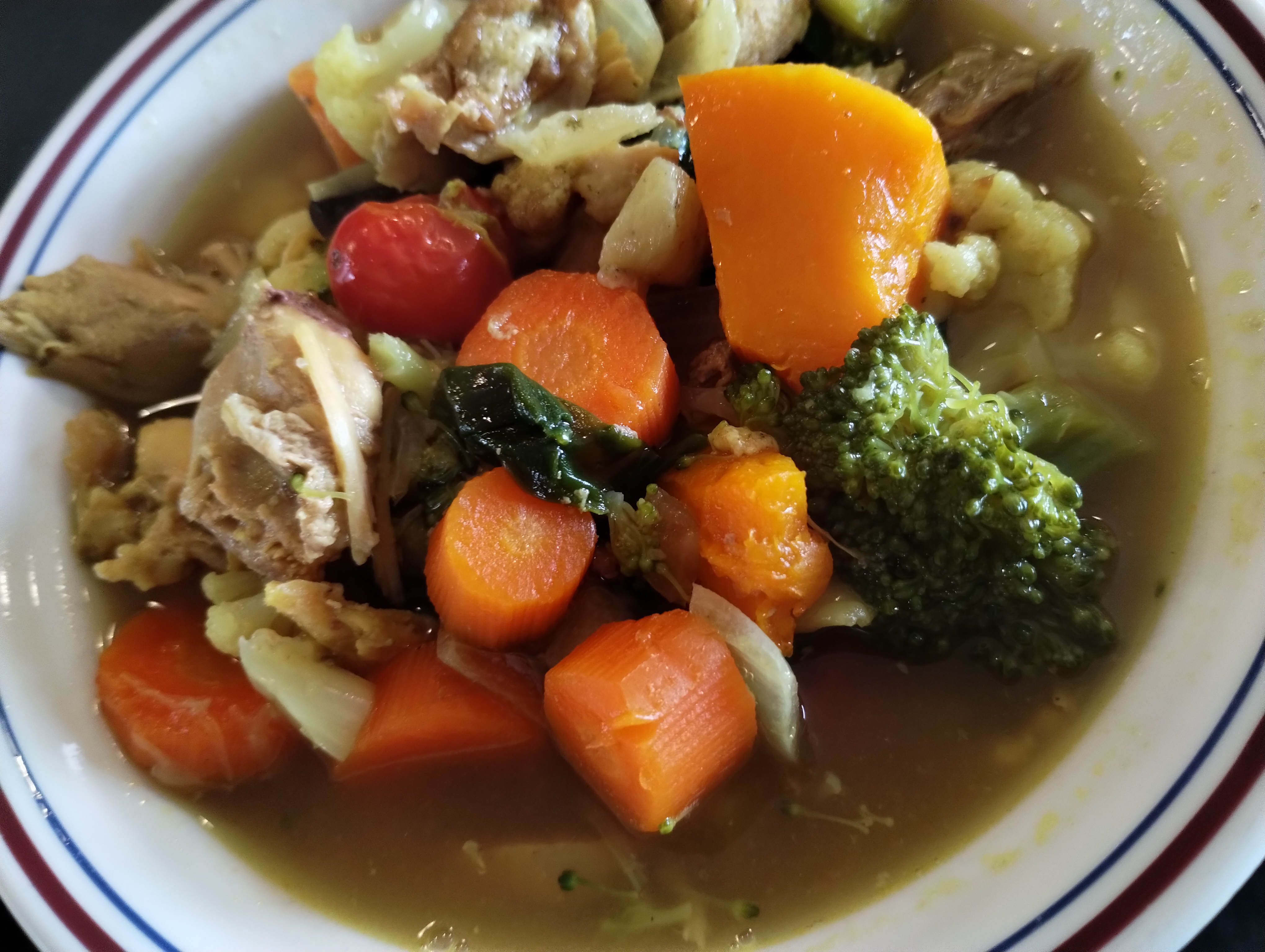
 I had to take a break for lunch.  I made soup from leftovers in the refrigerator.  Turkey, turkey broth, carrots, broccoli, cauliflower, tomatoes, onion, celery, mushrooms, roasted butternut squash, and spinach. A little seasoned salt and a little turmeric. It was really good, so good I had two bowls. 


Well, I was having trouble with the trailing cam latch, it is sticky.  


I saturated the area with the Marvel Mystery oil, worked it back and forth a few times, but it remains sticky.  I used an emery board to soften the rough edges a little, but probably not enough to matter. 

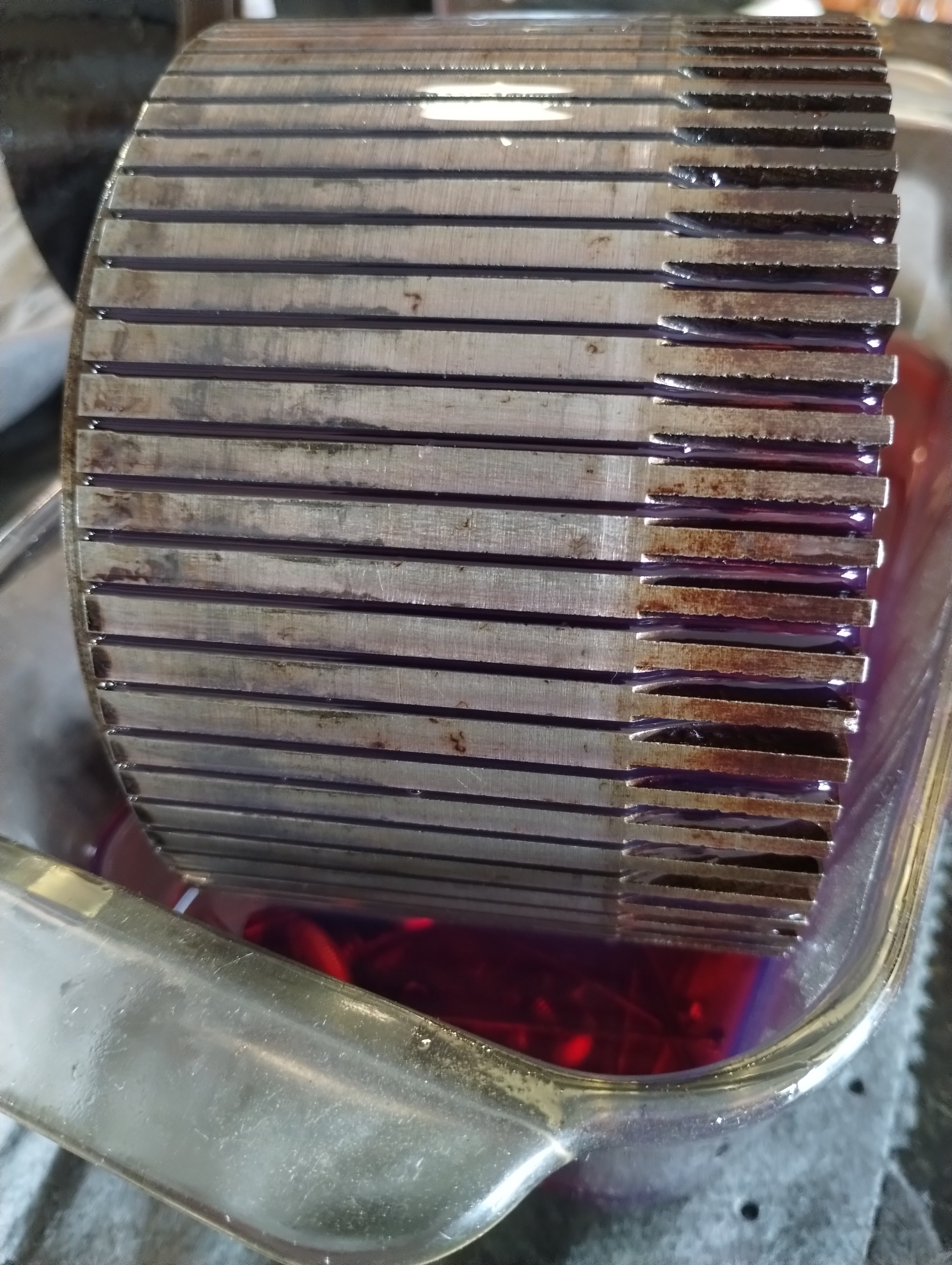
I also cleaned up the cylinder.  As you can see in the photo, it has some pitting.  I gave it a liberal dousing with Marvel Mystery Oil and then took an emery board down through each of the slots several times.  Some of them seemed a little tight.  


 I put it all back together and tried knitting.


It does go forward now, but it needs to be encouraged.  Bang, Bang, Bang.  In fear of damaging needles before I confirm with Pat at Angora Valley that she has needles for this machine, I only put a few needles in.  She's sending me a sample.  Her web site says that one of the needles will fit a Franz and Pope, if the gauge is the same.  I'm not sure how to measure gauge, but I sent her a photo of one of the needles with a ruler next to it.  

So I put these few needles in, added a yarn tension spring borrowed from a flatbed machine, grabbed a net produce bag from my kitchen counter, used the hammer inside the bag for weight, and tried knitting.  As I said, bang, bang, bang.  These parts are casts iron but that can't be good for them.  

So I disassembled everything again and am soaking the cyclinder shell in the Marvel Mystery Oil overnight.  I can't tell if the stitcky latch is because of a lubrication problem, or if the latch is damaged.
My plan is to put it back together after a really good long soak, then get my actual cast-on bonnet, a buckle and a weight from my other CSM, and see if it works any better.  


Franz and Pope Restoration Part 1

 I was very happy to find that one of the members of my fiberarts guild had a Franz and Pope Circular Sock Knitting Machine (CSM or CSKM) for sale.  

I have been looking for one for several years.  Franz was a jeweler, and Pope was a doctor.  They were both named William.  They lived in Crestline, Ohio, which is not far from here, just across the county line in Crawford County.   Franz and Pope patented their sock machine in 1874.  They manufactured the machines in Bucyrus, Ohio, the county seat,  and later in Canada.  The first chapter of Sandra Bonura's Book A Light in the Queen's Garden deals with the childhood of Pope's daughter, Ida and describes the CSM.  I have been trying to find the patent documents for a while, and the only one that Google Patent Search shows me is a Canadian patent. I did, however find an advertising document on a link to Library of Congress, Harvard University and other libraries that I found on the US Office of Patents and Trademarks website.  They have a new web-based patent search application named Patent Public Search tool.


The advertisement bulletin includes an illustration of the machine which matches the CSM my friend had.  So I offered him a range appropriate for a vintage working sock machine with all the parts. 


When I arrived to inspect it, I was disappointed that he did not have all the accessories.  He told me it only cranked backwards.  It was true, the way he had it set up, it only cranked backwards.  I tried to show him how to raise the needles so it would crank forward. But, when I did that, the needles slid right back down.  I couldn't immediately see how to remove the needles, because the retaining ring was made of steel, not a spring as in newer machines made in the 1920's or later.   I wasn't able to make it crank forward.  Because of that, and because I wasn't really sure if it was a Franz and Pope, having no raised or engraved lettering or rivets even for a metal plate, I withdrew my initial offer.  But after 
  • a Facebook post from Pete Oswald saying that the needles would stay up with weight
  • downloading and reading the manual 
  • finding the advertisement with the illustration above
  • thinking for a few days, 

I called and made a final offer, which he accepted.  

I picked it up yesterday.  I couldn't wait to take it apart and see what was keeping it from cranking forward.  

I took all the needles out and I am soaking them in  Marvel Mystery Oil.  I put one back in.  

So, I started taking it apart. 


These two screws on the bottom seemed like an obvious place to start.


And, I'm gonna have to take off the stitch size adjustment knob. 


I won't be able to remove the retaining ring for the cylinder unless I get the stitch size adjustment dial out of the way.  Out come those two screws.


Now I can remove this screw and the one on the opposite side, to remove the retaining ring. 

Even after all the screws were removed, the cylinder was so tight I had to get out a hammer and give it a few light taps before it started moving.  Once it started, it came out in a hurry.

The inside was not what I expected.  The fixed cams are different from my Home Profit. If I had read the manual closer, I should have been forewarned.  


So, one of the cylinder latches seems a bit sticky (the one labelled C in the drawing, and the cam lugs D and E had some burrs and rough edges. 


Thursday, July 27, 2017

MakerFest

Yesterday, July 26,  I demonstrated two machines at the GM Employee Car Show in Warren, Michigan.  The first machine was a KH-910 with the Evil Mad Scientist AYAB hack installed.  The other was my Home Profit antique circular sock machine with a prox sensor installed to count rows.


I also took project explanation posterboards, and a table full of about 25 pairs of socks and a few sweaters and shawls. and I took too much yarn, and a couple of boxes of tools and spare needles. And a cast-iron sewing machine base with a plywood top.  And a plastic chain.

 The back of my little GMC Terrain was pretty full.    I loaded it up the night before, because I needed to arrive at 6:30 to set up and find a good parking place after unloading.  In the morning I skipped breakfast at home and visited Tim Horton's instead.  Those guys in the drive-through are SUPER FAST, and very polite.

At the MakerFest, it took me about 2 hours to set up, re-arranging the tables a few times, with lots of help from the organizers. People started showing up and asking questions  about an hour before the official start time, so I was glad to have arrived early

I had a lot of interest from several people, including three youngsters to whom I explained the concept of swatching (prototyping to makers).  The first girl (maybe about 8 years old) asked, "What is this, a doll blanket?" and I explained that different yarns had different size stitches, and to make a full-size garment I need to do some math to calculate how many stitches to put in the full sweater in order to make it fit.  She nodded her head very seriously.  She understood the concept!  She looked at all the swatches and remarked that they were very pretty.

Eventually the sun climbed higher in the sky and I had to move my display from just on the outside of the tent to inside the tent to avoid the sun, which was beating down intensely.

I explained the difference between knitting and weaving to an automotive engineer, and related it to car hoses and tires and interiors of the cars, and how the different textiles used  have different properties.  I let a beautiful woman,  who might have been a model, sit down at the CSM and knit a few rows.  She had about 10 men following her around, and they were watching and listening intently also.  She proclaimed the experience "Immensely satisfying!"  I let another engineer get "up close and personal" to the CSM to see how a knit stich is formed when the cams lift the needle butts, forcing the old stich behind the latch and the new stich in the hook when the latch closes, slipping the old stitch off the needle.

While I was demonstrating, I knitted about 7 baby beanies on the CSM (with hems!) for donation to a GM hand knitting group to pass on to the Troy Beaumont hospital  neonatal unit for preemies.

I explained the Arduino/AYAB hack about 10 times, how the KH-910 Mylar sheets are no longer available, and that model did not have an interface to the floppy drive, so no way to permanently store the patterns, and showed the electronic components I removed from the KM and the buttons used to enter a pattern one stitch at a time.

There was at least one other Arduino project there, a programmer was using a pulse sensor input to record pulse rate while listening to various types of music, in order to put a playlist of calming music together.

All in all, I think it was a very successful day.  When the photos are available I will update this post.
© Bright Meadow Knits Blog · Privacy Policy · Terms of Use
© Bright Meadow Bicycle Blog · Privacy Policy · Terms of Use